
Quick takeaways
Sun and heat affect different panels differently
Florida’s ultraviolet exposure can gradually fade printed graphics, change the appearance of darker colors, and make the surface more brittle over time. Heat adds stress as the vehicle and vinyl repeatedly expand and cool.
Horizontal surfaces usually take the hardest exposure because they face the sun directly and collect more heat. A roof, hood, trunk, or pickup bed cover may show wear sooner than a shaded vertical door. The vehicle’s parking pattern matters too. A van parked outside all day will experience a different level of exposure from one kept under cover overnight or between routes.
- Dark colors and large solid areas can make fading or surface changes easier to notice.
- Salt air, humidity, tree sap, bird droppings, and road grime can add to surface wear when they are left in place.
- Wind-driven rain and debris can be harder on exposed edges and seams than ordinary parked conditions.
The film system should match the vehicle and the job
Vehicle wrap vinyl is not one interchangeable product. A cast film is made to conform more easily around curves, recesses, rivets, and body contours. Calendered vinyl can be appropriate for some flatter, shorter-term, or budget-conscious applications, but the specific product and expected use should be discussed before production.
The printed layer, protective overlaminate, adhesive, and application method work as a system. An overlaminate can help protect printed graphics from abrasion and weather, but it does not make a wrap immune to sun, washing, impact, or neglected maintenance. Ask which film system is being proposed for the vehicle’s panels, the intended use, and the expected exposure rather than evaluating only the color or finish.
- A full wrap has more seams, edges, recesses, and compound curves than simple door lettering.
- A partial wrap may reduce exposed film and installation complexity when the design does not need full coverage.
- Matte, satin, gloss, reflective, textured, and specialty films can have different cleaning and care requirements.
Installation and the vehicle surface set the starting point
Clean installation begins with a sound surface. Wax, silicone, grease, oxidation, loose paint, rust, cracked clear coat, and previous adhesive can interfere with bonding. A wrap may follow the condition of the panel instead of hiding it, and damaged paint can sometimes lift during removal.
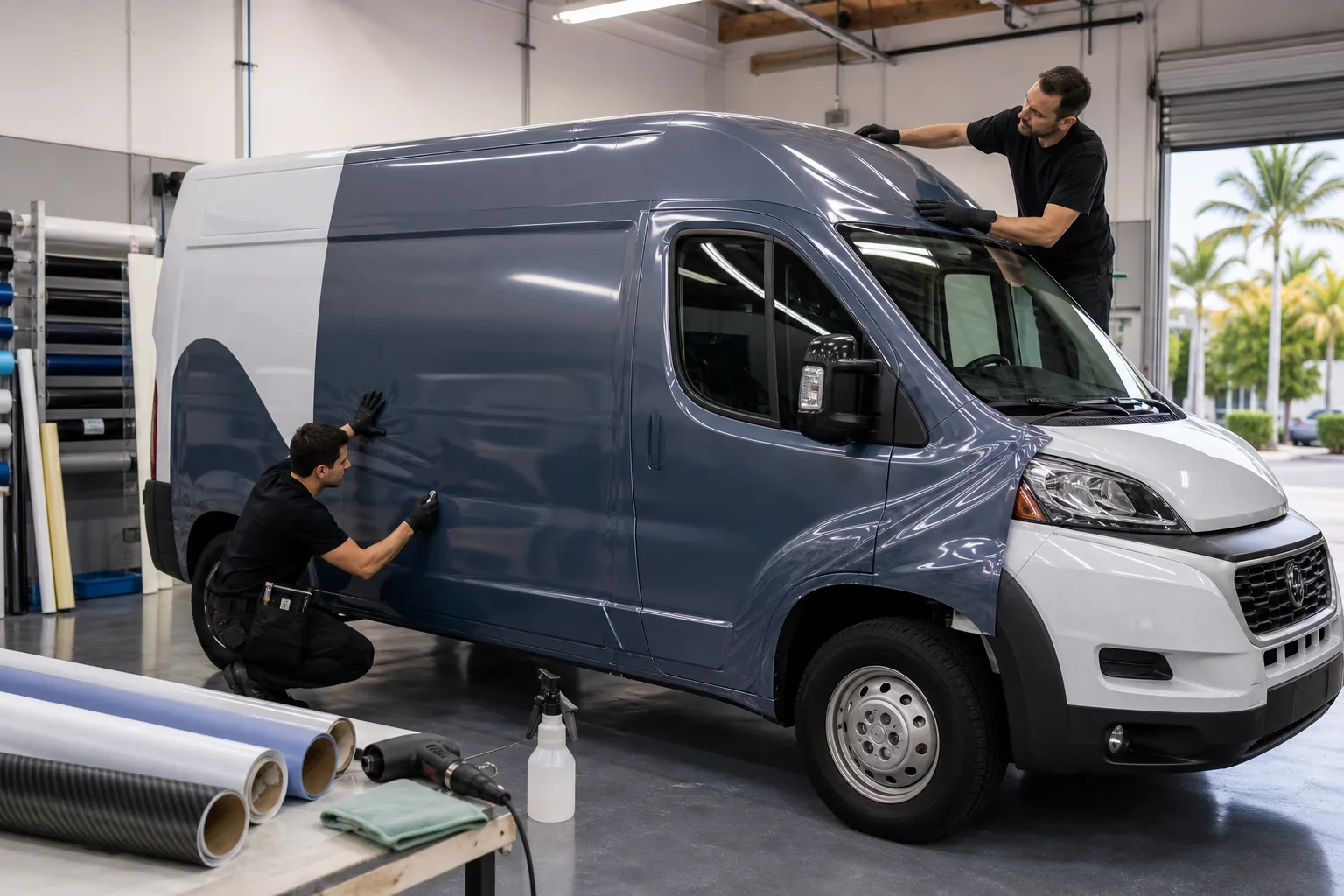
Curved areas and recessed van panels require controlled stretching and post-heating by an experienced installer. Excessive stretching, trapped contamination, poorly finished edges, or application over unsuitable repairs can lead to lifting, wrinkles, discoloration, or premature failure. Door handles, trim, hinges, seams, and wheel arches also need a realistic installation plan.
Before approving artwork, inspect the vehicle in person or provide clear photos of every side, including the roof, hood, bumpers, and damaged areas. A newer, well-maintained vehicle is generally a simpler starting point than one with peeling paint or a failing finish, but the final recommendation depends on the actual surface.
Washing and storage can protect or shorten the wrap’s life
Regular cleaning removes grit, road film, bird droppings, and other contaminants that can stain or abrade the vinyl. Hand washing with a soft cloth or mitt and a mild, wrap-compatible cleaner is usually gentler than aggressive scrubbing. If a pressure washer is used, keep the spray away from exposed edges, seams, and damaged areas rather than directing a concentrated stream at them.
Automatic car washes vary. Brushes, harsh chemicals, and high-pressure dryers can contribute to scuffing or edge lift, especially on an older wrap. Ask the sign shop or film manufacturer for care instructions for the exact material. Do not use abrasive compounds, rough sponges, or unapproved solvents without checking first.
Covered parking reduces direct ultraviolet exposure and surface temperature. It cannot prevent every issue, but it can make a meaningful difference for vehicles that remain stationary outdoors between work routes. Inspect the wrap periodically, particularly around door edges, wheel openings, mirrors, bumpers, and other high-contact areas.
- Clean spills, fuel, bird droppings, and tree sap as soon as practical.
- Do not pull at a loose edge or attempt a small repair with household adhesive.
- Photograph lifting, cracking, or discoloration early so the affected area can be evaluated before it spreads.
Plan the wrap around the vehicle’s working life
A delivery van that travels daily and stays outside has different demands from a service truck parked under cover. Frequent loading, tight parking spaces, gravel roads, automated washing, and contact with branches or equipment can shorten the useful appearance of a wrap even when the vinyl itself is suitable.
If the vehicle will be sold, reassigned, or rebranded on a defined schedule, a removable wrap or partial coverage may be more practical than designing for maximum coverage. If the purpose is long-term identification, spend more attention on film selection, panel preparation, edge finishing, maintenance, and where the vehicle is stored.
Tampa Signs and Stickers can review the vehicle, proposed coverage, and operating conditions before recommending a production approach. For a quote, provide the vehicle year, make, model, photos of all sides, approximate measurements, the intended design, parking conditions, and any paint or body damage.
Frequently asked questions
Does a vehicle wrap protect the original paint?
It can provide a layer between the paint and ordinary outdoor exposure, but it is not a guarantee against rock chips, dents, corrosion, neglected cleaning, or damage from poor paint. The condition and type of the underlying finish should be evaluated before installation.
Can a wrap be installed over existing lettering or adhesive?
Usually, existing graphics and adhesive should be removed or assessed first. Old adhesive, raised lettering, residue, and uneven paint can show through the new vinyl or reduce adhesion. Removal needs to account for the paint condition and the age of the existing graphics.